
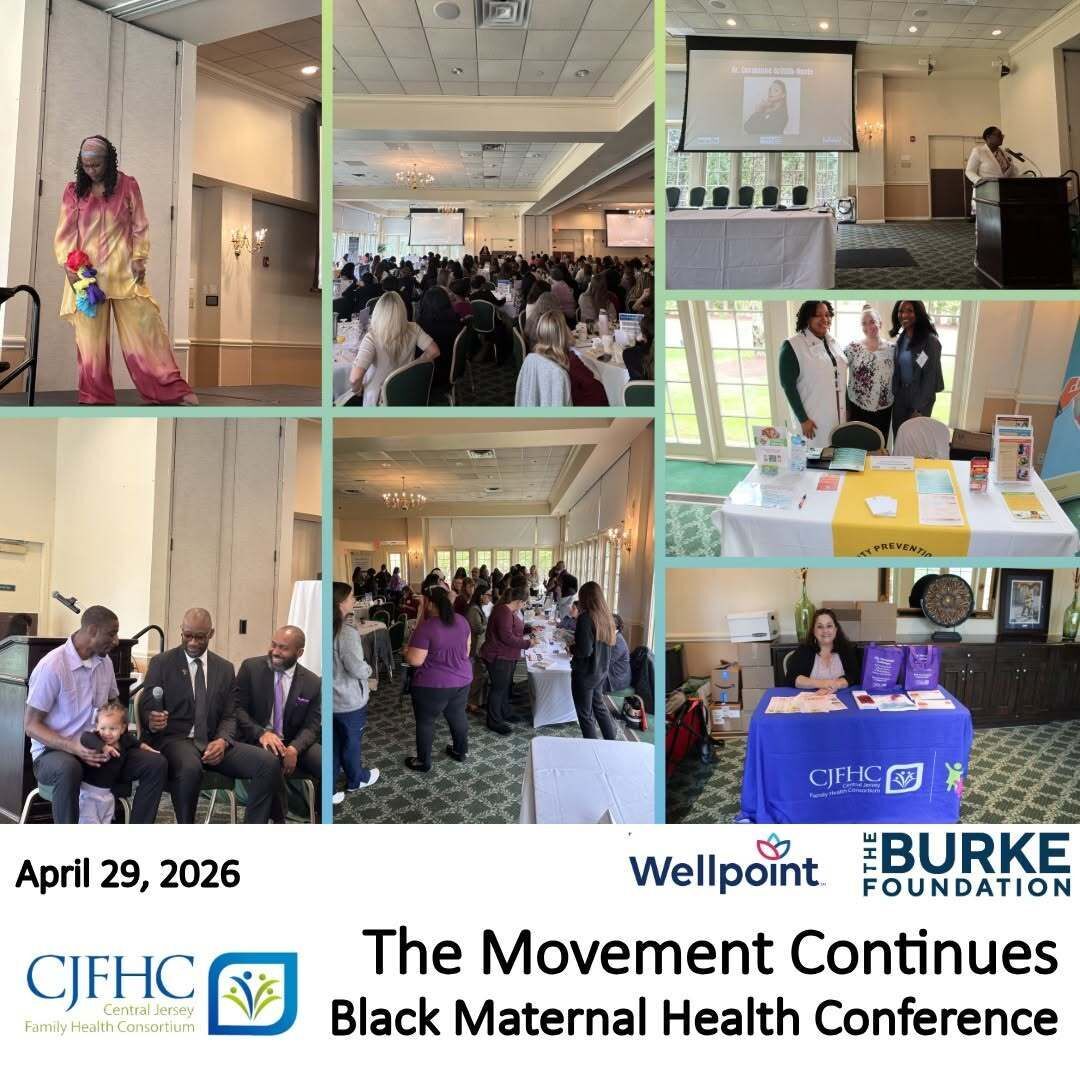
On April 29, more than 100 healthcare professionals, advocates, and community organizations gathered at Forsgate Country Club for the 2026 Black Maternal Health Conference. Centered around the theme, "The Movement Continues: Advocating for the Unheard Voices of Black Mothers, Fathers, and Families," the conference brought together individuals committed to advancing equity and improving maternal health outcomes across New Jersey. This year's conference also featured two generous sponsors, The Burke Foundation and Wellpoint.
Keynote speaker Dr. Coralanne Griffith-Hunte challenged participants to look at their role in solving the Black maternal health crisis from new angles and new perspectives. Her passionate speech reminded attendees that forward movement does not have a pause button, “You are not here by accident,” she said, “you are here because you can move something—some of you wear stethoscopes, some carry clipboards, some carry petitions and some of you carry stories…but all of you carry power. Your voice matters.”
Throughout her remarks, she reminded attendees of the importance of collective action and advocacy, sharing the powerful message: "This movement is built on voices that refuse to be silent." She encouraged those in attendance to use their unique positions and influence to advance maternal health.
The conference also highlighted the critical role fathers play in supporting healthy families. During an engaging Family Feud-style discussion, Black fathers from different generations shared their perspectives on parenting, pregnancy, and maternal health. The conversation offered insight into the evolving experiences of fatherhood while emphasizing the importance of fathers as partners, advocates, and sources of support throughout the maternal health journey.
Attendees also heard from Pamela Taylor, MPH, MCQC Program Manager for the Maternal & Infant Health Innovation Authority. Taylor provided updates on the Maternal Infant Health Innovation Center, shared current maternal and infant health data, and discussed upcoming programs and services that will support families in the Trenton area.
One of the most memorable moments of the day came through a powerful liturgical dance performance that captured the emotions, challenges, resilience, and loss experienced by Black mothers and families as a result of the Black maternal health crisis. The performance moved many attendees to tears and served as a reminder that stories can be told not only through words, but through art and shared experience.
As the conference came to a close, participants left with renewed energy and shared commitment to advancing maternal health equity. While progress has been made, the day's discussions reinforced that the work is far from over.
The movement continues because communities continue to show up, speak out, and advocate for a future where every Black mother, father, and family is heard, valued, and supported.
