

Making It Work Together: Supporting Breastfeeding in the Workplace Video Launch & Conversation from NJ Supports Breastfeeding
Click Here to Watch the Videos
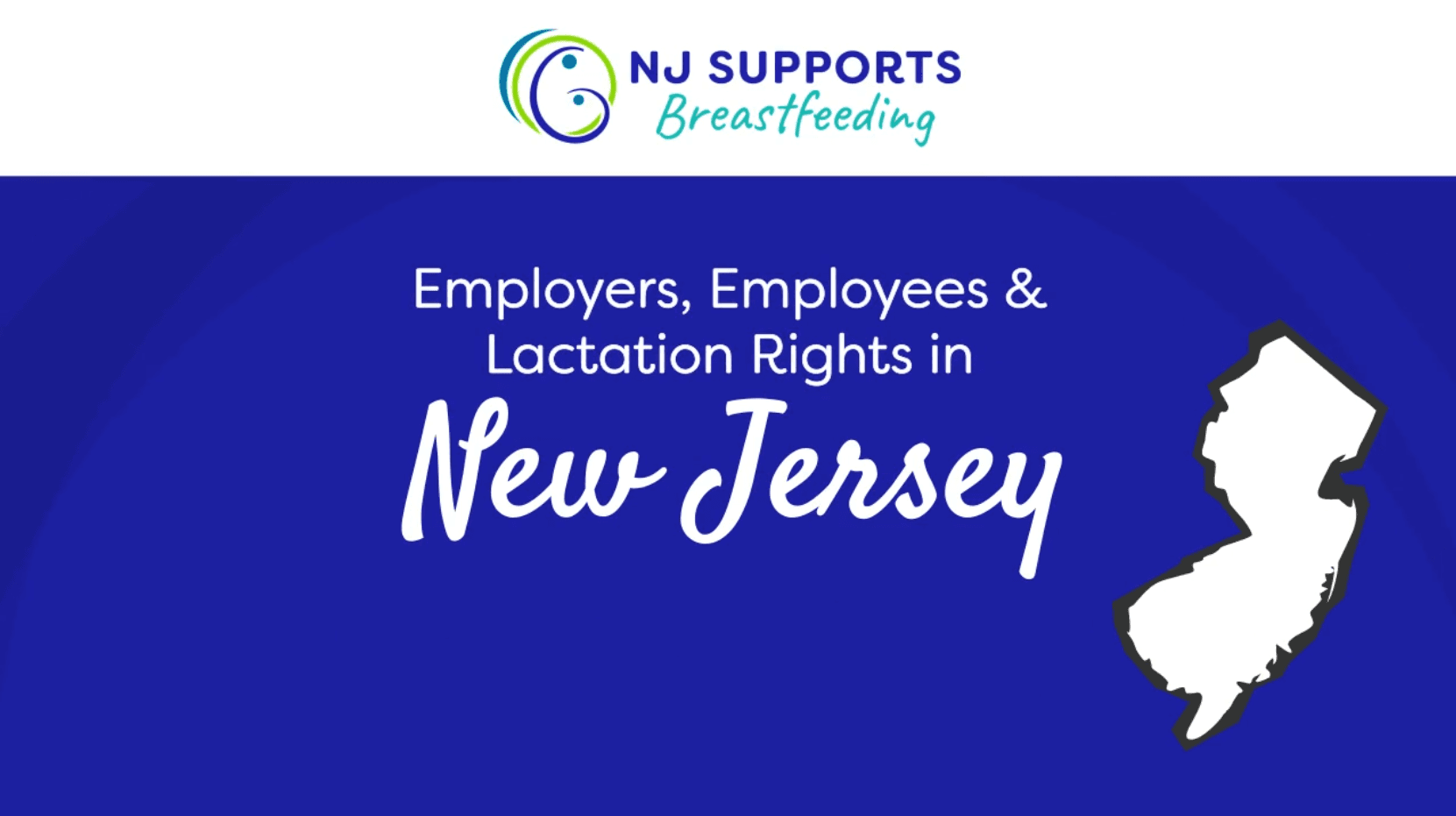
The NJ Supports Breastfeeding Initiative, part of the New Jersey Breastfeeding Strategic Plan, has launched a new virtual training and awareness resource to help New Jersey employees, employers, professionals, and families better understand breastfeeding and lactation rights in the workplace. The training, “Employers, Employees and Lactation Rights in New Jersey,” officially launched August 20, 2026, during a special virtual event, “Making It Work Together: Supporting Breastfeeding in the Workplace Video Launch & Conversation.” Legal disclaimer: The content provided in this article and in the training videos are for informational purposes only and does not constitute legal advice.
Held during National Breastfeeding Month, the launch brought together maternal and child health professionals, healthcare providers, community partners, employers, employees, and others who support New Jersey families. The event featured a presentation from New Jersey Breastfeeding Strategic Plan team members Ellen Maughan, JD, IBCLC, New Jersey State Breastfeeding Coordinator, and Videsha Joshi, MPH, CBS, NJ Breastfeeding Strategic Plan Associate, a preview of the new training, and a conversation with special guest Jill Wodnick, MA, LCCE, IMH-E®(II), focused on workplace breastfeeding rights and practical ways communities and workplaces can better support lactating employees.
Why Workplace Support Matters
The new training is part of the New Jersey Breastfeeding Strategic Plan’s work to address a major roadblock for postpartum families and breastfeeding: the juggling of returning to work and breastfeeding. During the launch, Ellen Maughan, JD, IBCLC, explained that returning to work continues to be a significant challenge for families, “Employment still looms large as a challenge to breastfeeding initiation and duration,” she said during the event. She noted that research and conversations with New Jersey families have shown that concerns about workplace lactation support and having to return to work for financial reasons can influence decisions about breastfeeding and may contribute to earlier-than-desired weaning.
An integral part of the New Jersey Breastfeeding Strategic Plan is recognizing that supporting breastfeeding is a shared responsibility that extends well beyond the birthing parent-infant dyad. Breastfeeding support involves families, communities, healthcare providers, government, employers, childcare providers, and others. The workplace is an important part of that larger support system.
A Resource for Anyone Working in New Jersey
The “Employers, Employees and Lactation Rights in New Jersey” training is designed for more than employers and maternal health professionals. It is also for employees who are breastfeeding, planning to breastfeed or pump, returning to work after having a baby, or anyone who lives or works in New Jersey who simply wants to better understand their workplace lactation rights.
Offered with English, Spanish, Haitian Creole and Portuguese voiceovers and captions, and the option to watch with or without background music, the videos are designed to be as accessible as effective, engaging, and accessible possible.
The training covers:
The benefits of breastfeeding and lactation for families and workplaces
New Jersey and federal workplace lactation laws and protections
Reasonable workplace accommodations
Break time and private spaces for expressing milk
Protection from discrimination, retaliation, and harassment
Practical ways employers can create lactation-friendly workplaces
Strategies for planning and communicating about lactation accommodations
Examples on how rights and accommodations can apply in different settings using real-life workplace scenarios involving professions that can face unique challenges when pumping milk at work. The scenarios include fast-food workers, healthcare workers, and teachers.
Each training includes an optional pre-test and post-test, with URLs in the video description and QR codes embedded in the video to help viewers assess what they learned.
The “Employers, Employees and Lactation Rights in New Jersey” training is now available through the NJ Supports Breastfeeding website and YouTube channel. The training can be viewed and shared for free, and additional resources are available through the site's Back to Work section, including information about preparing to return to work, pumping at work, workplace rights, paid leave, and childcare.
Whether you are an employee planning to breastfeed, an employer looking to strengthen workplace policies, a healthcare provider supporting families, or a community partner helping someone prepare to return to work, this new resource can help you better understand workplace lactation rights and the role we all play in supporting breastfeeding.
Launch Conversation Highlights the Need for Practical Support
Following the training preview, Jill Wodnick, MA, LCCE, IMH-E®(II), a New Jersey maternal health and lactation advocate, joined the conversation to discuss federal workplace protections and the importance of making information about those protections accessible and understandable.
Wodnick praised the new training calling the video “amazing” and highlighting its section on retaliation. She also emphasized the importance of collaboration across New Jersey with events like the kick-off that bring together community members, professionals and advocates, “We are stronger together, and it's really great to have this conversation,” Wodnick said.
Wodnick reviewed federal protections, including the Pregnancy Workers Fairness Act and the PUMP Act, and shared resources designed to help employers and employees understand their rights. “Just having a moment to have 10 minutes to focus on two federal laws and ways to communicate them really may help someone,” Wodnick said.
She also emphasized the broader breastfeeding support system, which Wodnick described as an “entire ecosystem” that can include WIC breastfeeding peer counselors, home visitors, pediatric offices, doulas, faith-based organizations, employers, and others.
Turning Information Into Action
These new training videos are designed for New Jersey families, communities, healthcare providers, employers, childcare providers, and anyone who is part of the ecosystem of support for breastfeeding families. We encourage everyone to share and use these videos to develop actionable, feasible ways to support breastfeeding in the workplace, like:
Adding these videos to the required training for new employees.
Sharing with employees, clients or patients who are preparing to go on maternity leave.
Sharing on social media.
Sending to friends or family who are pregnant or preparing to go back to work after pregnancy.
We also encourage everyone to browse and share the NJ Supports Breastfeeding website, which hosts information and resources for professionals and families about breastfeeding and lactation beyond returning to work like how to prepare for breastfeeding, breastfeeding timelines, pumping, county by county lactation support listings, and templates and guides for professionals.
