
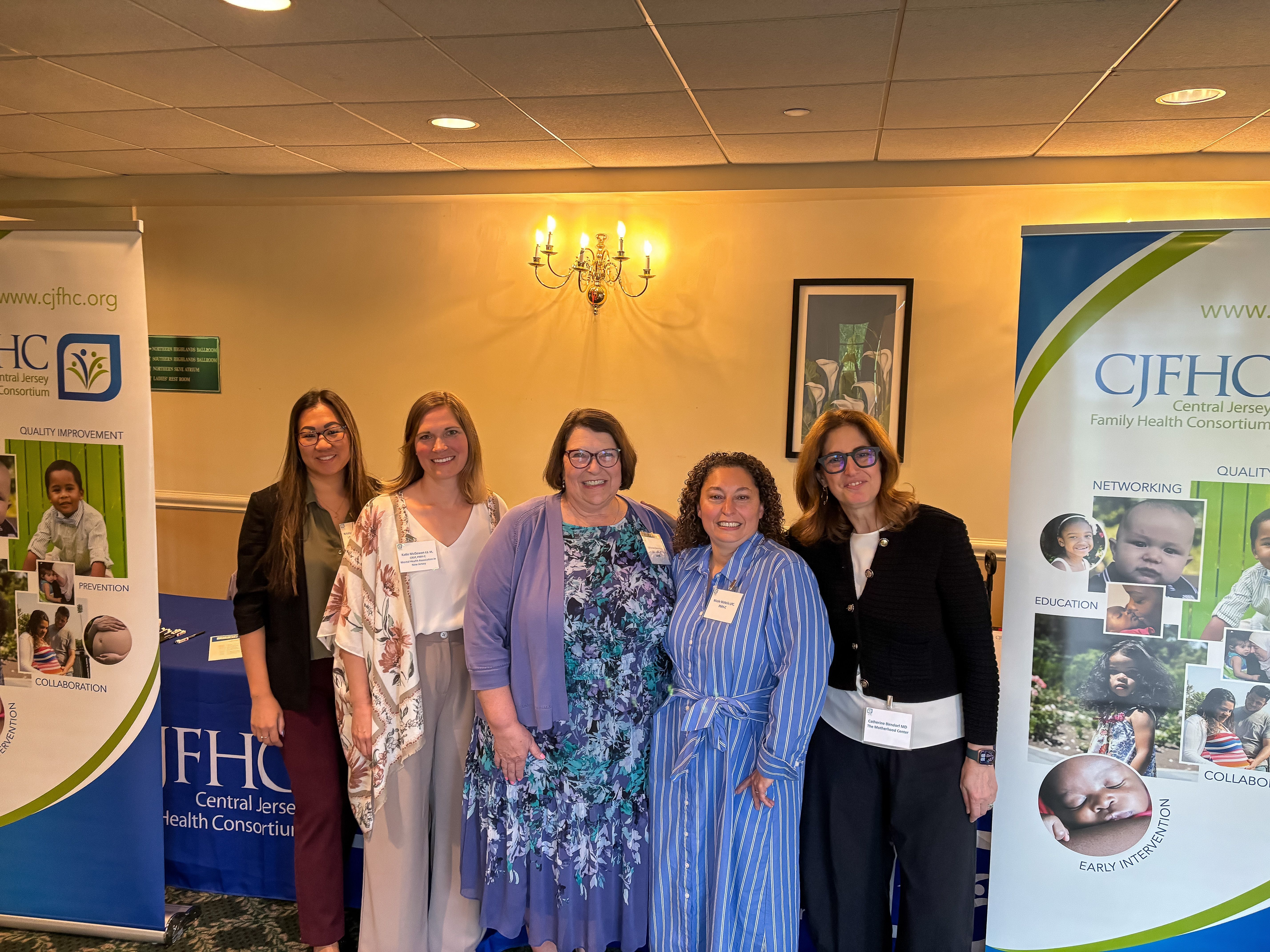
On Wednesday, April 22, 2026, Central Jersey Family Health Consortium (CJFHC) proudly welcomed 150 healthcare professionals, advocates and community partners to Forsgate Country Club for the Perinatal Mental Health Conference, “Re-Imagining Perinatal Wellness: Support for Every Family, Every Journey”. Designed to expand how we think about perinatal wellness and family support, the conference brought together diverse perspectives on a variety of topics.
This conference was organized and hosted by CJFHC’s NJ Postpartum Resources and Support Network (NJPRSN), which is funded by a grant by the New Jersey Department of Health. The day began with a light breakfast and opening remarks from Kathy Donaldson, MSN, APN, WHNP-BC, PMH-C, RNC-OB, C-EFM, Program Manager of the NJ Postpartum Resources and Support Network.
Re-Imagining the Human Experience: Rage, Mental Health Stigma and Perfectionism in Parenting.
The first session, Maternal Rage: Implications and Interventions, was led by Nicole McNelis, MEd, NCC, LPC, PMH-C. Maternal rage, McNelis explained, is an often-overlooked symptom that can contribute to Perinatal Mood and Anxiety Disorders (PMADs). Regularly portrayed as simply an angry or tired birthing parent, maternal rage is much more prevalent than many realize. “80% of professionals who work with perinatal clients work with clients who are experiencing maternal rage,” McNelis said, “and this rage isn’t plain anger. It’s a call for help.” Encouraging participants to re-frame maternal rage in the context of what it means to re-imagine perinatal wellness, Nicole’s presentation emphasized the individual, cultural, and societal pressures that build up to trigger maternal rage, and the actionable strategies that participants could implement immediately with their patients to break that cycle. Through personal storytelling, interactive discussions and group collaboration, McNelis lead participants through the stages of maternal rage including how it creates an unhealthy cycle that can lead to the detriment of perinatal wellness and development of PMADs. McNelis also called for broader systematic interventions such as better access to care, better paid family leave, and a dedicated push to reframe the perceptions of the ‘angry mom’.
Nicole McNelis’ re-imagining of how rage and emotion are confronted in perinatal wellness set the tone for keynote speaker Catherine Birndorf, MD, CEO and founder of The Motherhood Center of New York, and her presentation, A Clinician’s Guide to Perinatal Therapy and Medication. Grounded in the most up-to-date research and real-world experience, Dr. Birndorf called for more collaborative and patient-centered care as the lynchpin to what it means to re-imagine perinatal wellness. Citing PMADs as a leading complication of childbirth, Dr. Birndorf specified shame and stigma as one of the main reasons why the vast majority of PMADs go untreated and undiagnosed.
Re-imagining perinatal wellness with a data-driven and patient-centered approach and creating a space that is collaborative between provider and patient creates a space where PMADs can be more easily identified and treated. “Validating patients where they’re [the birthing parent] at,” Dr. Birndorf said, “Giving them permission to survive, to feel, eliminate shame and embarrassment will reduce the stigma, and lead to more successful screening and treatment. When patients feel comfortable, and unjudged, they can more comfortably discuss and decide on treatment options with their providers, including the option for medication. “[Using medication is] a risk-risk analysis,” Dr. Birndorf said, “you need to work with your patients through informative care to help them make the best decision for their health.”
Kristy Champignon, MA, LPC, LMHC, ACS, PMH-C and her presentation Overcoming Perfectionism in Parenting explored the need to re-imagine the definition of perfection and perfectionism in perinatal wellness. With witty dialogue and interactive audience participation, Champignon challenged the deeply-ingrained societal pressures that can drive perfectionistic thinking, and how that thinking contributes to the overall development of PMADs. By inviting participants to evaluate how perfectionism appears in their own lives, Kristy built a bridge for providers to more deeply connect with and understand the perfect isolation experienced by their clients.
Re-Imagining Community: Lived Experience and Inclusive Care in Perinatal Wellness
After a morning of learning strategies and clinical introspection, Katherine McGowan, EdM, CRSP, PMH-C, brought a deeply personal and human lens to what it means to re-imagine perinatal wellness in her presentation Lived Experience: Connection to Peer Support. After a morning of re-imaginings centered around creating space for birthing people and families, McGowan lead participants on the next step: building community within that space. Sharing her experience with traumatic birth and the mental and emotional isolation that followed, Katie shared how that cycle of embarrassment and isolation kept her from initially seeking help. It was after her emotions were validated that she reached out for and discovered peer support groups and the transformative power of being amongst those who understood what she went through. Her talk encouraged participants to re-imagine how perinatal wellness can go beyond the clinical setting.
The final speaker of the day, Kristin Cavuto, MSW, LSW, IBCLC, and her presentation All Are Welcome: Inclusive Care for LGBTQ+ Families, further pushed the audience to re-imagine how their patients experience life differently from themselves. Cavuto challenged the perception of what maternal health means as it applies to the LGBTQ+ community—going into detail on the impact of societal and institutional pressures, bias, and even laws and policies on members of the LGBTQ+ community and how that impact is often carried into the perinatal space.
Re-Imagining Perinatal Wellness: Moving Forward, Together
At its core, Re-Imagining Perinatal Wellness: Supporting Every Family, Every Journey was a call to action for maternal health and mental health professionals to re-imagine how they approach perinatal wellness and how they support every family and every journey. Large scale change begins with individual, everyday interaction –how providers listen, validate and support the individuals and families in their care.
Central Jersey Family Health Consortium and the NJ Postpartum Resources and Support Network are grateful to the speakers, attendees, and partners for contributing to a successful and impactful day. The mission of the Consortium is to promote an equitable and healthy future for families, through services, advocacy, education and collaboration. This conference, through advocacy, education, and collaboration, is one more step to ensuring a legacy of health for birthing parents in New Jersey.
