
At Central Jersey Family Health Consortium, we know finding reliable resources for continuing education in maternal health can be difficult for nurses, doctors, doulas, and other professionals.
We understand Central New Jersey and the issues families face within the medical system, which is why we have compiled a trusted list of resources to give you unique and critical insight into your patients.
Addictions and Substance Abuse
Use of drugs and alcohol can complicate pregnancy before, during, and after birth. Supporting perinatal individuals dealing with addictions and substance abuse is an urgent matter that lies at the intersection of maternal health and substance use disorders. Supporting those dealing with perinatal addiction is a multi-faceted endeavor involving healthcare professionals, support networks, and social services. The resources below are here to assist you in creating an environment of empathy, knowledge and non-judgmental care in your practice.
- Effects of Prenatal Alcohol Use on Mothers and their Babies
- Looking Beneath the Surface of Opioid Addiction
- Marijuana use During Pregnancy and Breastfeeding
- Substance Use in Pregnancy and Maternal and Fetal Effects
- The Role of Stigma for Pregnant and Parenting Women in Addiction and Recovery
- Perinatal Addiction Resource Guide
- Self-Compassion and Compassion for Others: Tools for Reducing Shame and Stigma in Addiction and Recovery - Training Upon Request, Contact Roseann Cervelli, rcervelli@cjfhc.org
See more resources from the Perinatal Addiction Project.
Breastfeeding
- NJ Supports Breastfeeding - Statewide Breastfeeding Support & Resources for Parents, Families and Professionals.
- Implicit Bias and Clinical Breastfeeding Care
- Breastfeeding Aversion and Agitation
- Addiction & Marijuana Use during Pregnancy and Breastfeeding
- Family Connects is a program that provides families with in-home and virtual post-partum support, including breastfeeding education. Learn more about Family Connects as a resource for your patients.
Culture and Connecting to Diverse Patient Communities
New Jersey is one of the most diverse states in the country, with people from many different countries and cultures. The customs, beliefs and values held by these individuals and communities play a vital role in how pregnancy and childbirth are approached, from prenatal care and birthing practices to postpartum support and newborn care. Healthcare professionals must understand, respect, and collaborate with patients from diverse cultural backgrounds to ensure that they are getting equitable healthcare and fostering trust and communication between healthcare providers and the communities they serve.
- Addressing the Needs of Asian Indian Women in the Peripartum Period
- Caring for Asian American Children with Special Needs
- Gaining Insight into Asian Indian Teens and Sexuality
Human Trafficking
Whether coerced, deceived or forced into human trafficking, individuals and birthing persons require specialized, sensitive, and trauma-informed care to ensure their own well-being and the health of their families. Addressing human trafficking calls for a comprehensive approach that extends beyond traditional healthcare boundaries, involving law enforcement, social services, and advocacy to ensure victims of trafficking receive the support and protection they deserve.
Perinatal Loss
Witnessing a patient lose a pregnancy is devasting. Pregnancy loss is a shared experience and can be a difficult path to navigate as a nurse, doula, doctor, social worker, or other healthcare professional. These resources are here to help you navigate the grieving process for yourself, and to aide you in supporting your patients during their time of loss.
- Stillbirth: Can Happen to Any Pregnancy – New Jersey’s first dedicated resource to preventing and raising awareness around stillbirth. This is a resource for patients and providers to use to prevent stillbirth.
- Helping Families Find Answers After Perinatal Loss
- Supporting Jewish Families in Times of Sadness
- Deepening Our Understanding of Perinatal Loss & How To Support Our Families During a Subsequent Pregnancy – Password: n7VG7I&g
Perinatal Mood and Anxiety Disorders (PMAD)
More is learned every day about the perinatal experiences of birthing people and their partners. Perinatal Mood and Anxiety Disorders (PMAD) can impact the birthing person and their partner for weeks, months, or even years after the birth of their child. These resources are here for you, as a provide, to help you empathize and understand how PMAD’s can impact your patient, and to raise awareness about how PMAD can impact the birthing and healing process. For more resources for your patients, please visit our Pregnancy and Parenting Wellness page.
- Medication Therapy for Perinatal Mood and Anxiety Disorders
- Promoting Maternal Mental Health in the Community
- Trauma during Gestation, Birth and Postpartum: The Effect on Maternal Mental Health & Wellbeing
- Journeys of Two PMAD Survivors – Password: %FBto4jB
To order the Speak Up When You're Down brochures: Fill out this form and email it to PPW@CJFHC.org
To order brochures created for the CJFHC region only: Fill out this form and email it to PPW@CJFHC.org
Pregnancy and Postpartum
The journey from conception through pregnancy, childbirth, and the postpartum periods in a birthing person’s is a remarkable and transformative experience that necessitates specialized care and support.– Post-birth complications, pre-existing anxiety and mood disorders, and even different neurotypes such as autism and ADHD makes specialized, people-first care a necessity. Recognizing the unique physical, emotional, and social requirements of individuals during this phase of life is essential for promoting the well-being of mothers and infants. The resource below give you the tools and expertise to address the diverse physical, emotional, and social aspects of pregnancy and postpartum care.
- Integrating POST-BIRTH Warning Signs Education and Clinical Practice into Homes and EDs
- Addressing the Unique Needs of Pregnant and Postpartum Women with Autism Spectrum Disorder
- Embracing Physiologic Birth Part 1
- Embracing Physiologic Birth Part 2
- Embracing Physiologic Birth Part 3
SIDS & Sleep Safety
Addressing Sudden Infant Death Syndrome (SIDS) is not just a matter of medical concern; it is a deeply emotional and profound issue that touches the lives of parents, caregivers, and healthcare professionals. Staying up-to-date on the most recent risk factors and prevention techniques, like sleep safety, is the best and most effective way to raise awareness for, and prevent SIDS.
Black Maternal Health Conference - The Movement Continues: Advocating for the Unheard Voices of Black Mothers, Fathers, and Families
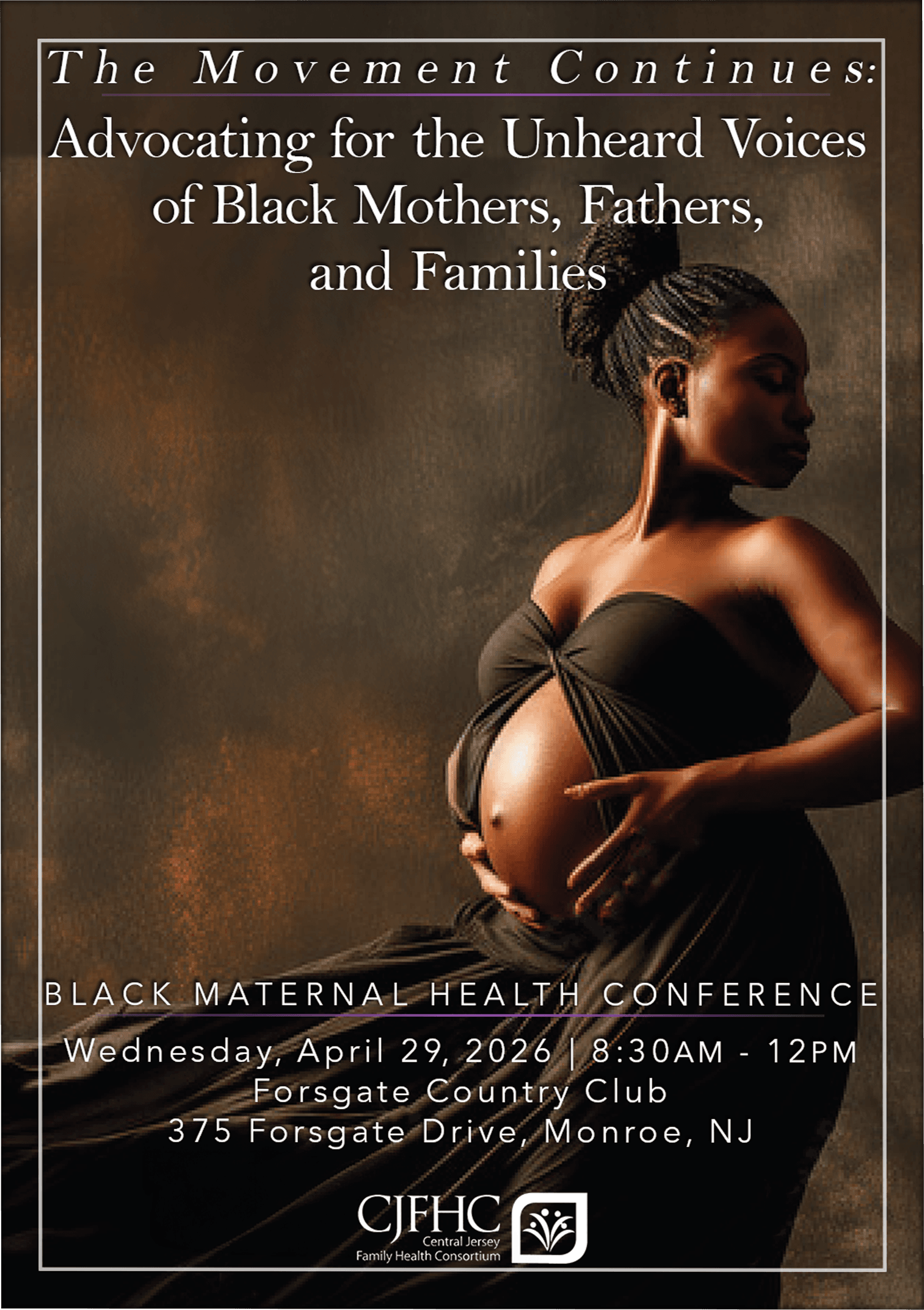
Registration is full for this event!
The Movement Continues: Advocating for the Unheard Voices of Black Mothers, Fathers, and Families builds upon the strong foundation laid in previous years’ themes—Year 1: Choose to Improve, Year 2: Turn Up the Volume by Partnering with a Purpose, and Year 3: Rise Up! Advancing Black Maternal Health Equity in New Jersey. Each theme has represented a strategic progression in our collective journey: from personal and professional commitment, to collaboration, to empowerment and action for systemic change.
This year’s theme, “The Movement Continues,” signifies both reflection and forward momentum. It acknowledges the dedication and progress that have been made to improve Black maternal health outcomes, while emphasizing that the work is far from over. It challenges us to sustain the movement—expanding our advocacy to include Black fathers and families, whose experiences are often overlooked in the broader maternal and child health conversation.
By centering unheard voices, we reaffirm our commitment to equity, justice, and community-centered solutions. This theme calls on stakeholders, healthcare professionals, and community advocates to continue amplifying stories, addressing disparities, and creating spaces where every Black parent and family can be seen, heard, and supported.
Ultimately, The Movement Continues reminds us that advocacy is not a moment—it is a sustained movement that evolves with every effort to protect, uplift, and empower Black mothers, fathers, and families.
